Labels

90th Kokufu-ten Exhibition (1) ABC (4) ABC4 (1) Akira Bonsai (2) ambrevatte (1) Apple (1) AusBonsai (1) Bilimbi (1) Bilimbi Rond (1) Bjorn Bjorholm (1) Bjorvala Bonsai Studio (1) Bonsai (67) bonsai artists (5) Bonsai Club Mauritius (5) bonsai competition (1) bonsai competition 2013 (3) Bonsai Europa (1) Bonsai Events (2) bonsai experiment (1) Bonsai From Seed (8) Bonsai Lovers (2) Bonsai Mauritius (60) Bonsai Mauritius for Sale (6) Bonsai nursery Mauritius (4) Bonsai progression (18) Bonsai Videos (1) Breynia (1) Carving (1) casuarina 001 (1) cherry (2) Clerodendrum (2) Clerodendrum Bonsai (2) Clerodendrum Smithianum Bonsai (2) Clerodendrum Smithianum Bonsai 001 (2) Cryptomeria 001 (1) Cryptomeria japonica (1) cuphea (5) cuphea 001 (2) cuttings (1) deadwood (1) DIY (1) Eagle Entrepreneur Award (1) false bonsai mauritius (1) fern (1) ficus (7) Ficus 002 (1) Ficus 003 (2) Ficus benjamina (2) Ficus bonsai (5) ficus retusa (1) ficus retusa bonsai (1) ficus rubiginosa (2) ficus rubiginosa #2 (2) François Jeker (1) Hem Collection (3) Jan Culek (2) John Naka (1) juniper (3) Kaori Yamada (1) kusamono (3) lantana (1) Laurent Breysse (1) Leucaena Leucocephala (3) Light Bulb Clerodendrum (2) Ligustrum (8) lime sulphur (2) Malpighia coccigera (4) Mauritius (15) moss (1) Nebari (4) Noelanders Trophy (1) ofBonsai (1) pine (1) Pinus Elliottii (1) Privet (4) Privet 001 (1) Privet 002 (1) Privet 003 (1) privet 011 (1) Repotting (8) rose (1) Ryan Neil (1) Ryuga (1) saika bonsai (1) Sakura (1) seed (6) Sergio Martínez (1) Shohin (1) Slash Pine (3) Slash Pine 001 (1) Slash Pine bonsai (2) Slash Pine Hem 002 (1) Smithianum (2) Species Guide (1) Styling (1) Tomio Yamada (1) Tony Tickle (2) Trochetia (1) Trochetia Boutoniana (1) Vaneron Garden Center (2) Walter Pall (3) white pine (1) Wiring (5) World Shohin Photo Awards (1) Yajay Goindo (1) Yamadori (2)
Showing posts with label Privet. Show all posts

2013-03-20

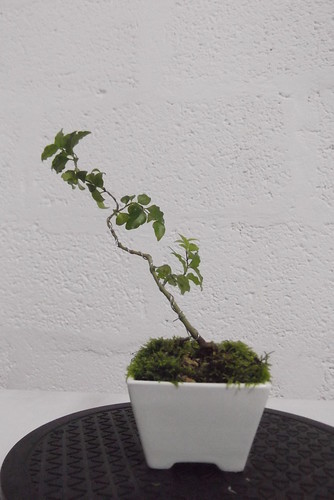
Ligustrum #011 : Mame progression from a root

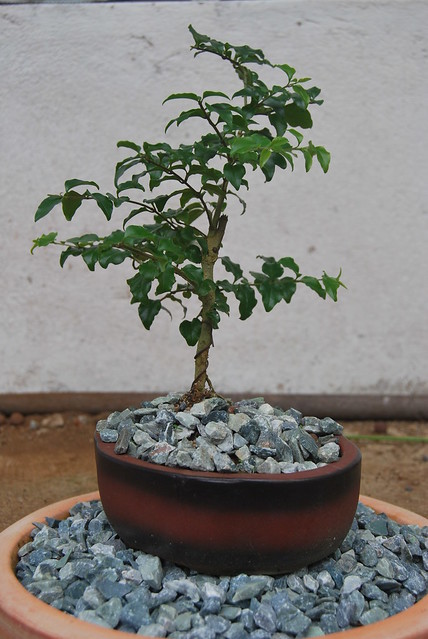
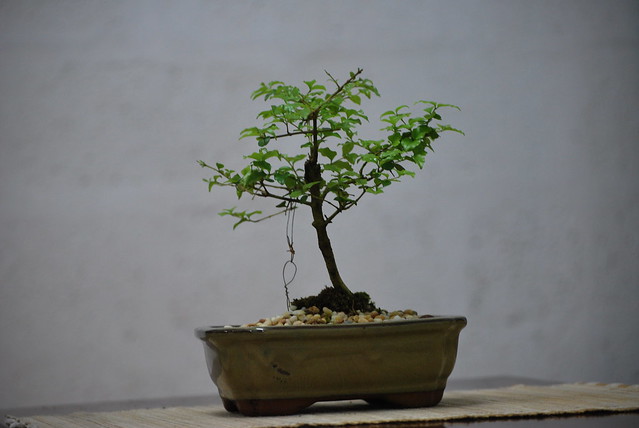
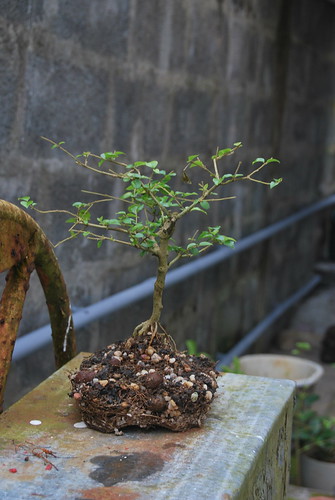
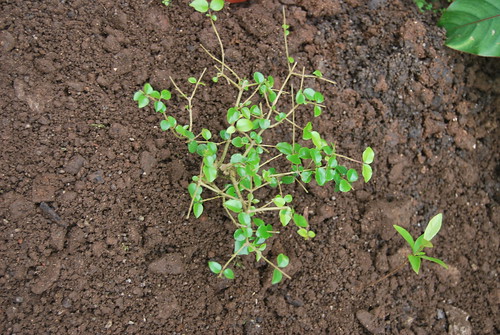
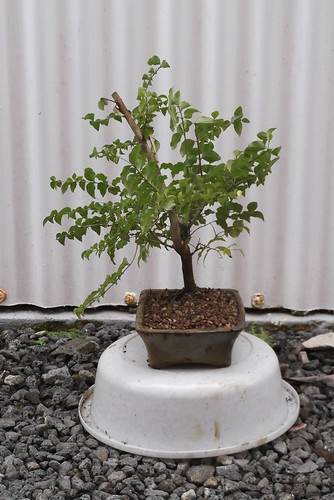
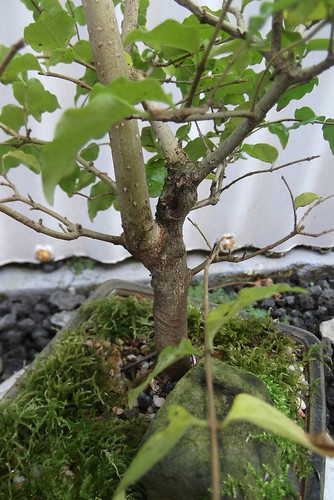
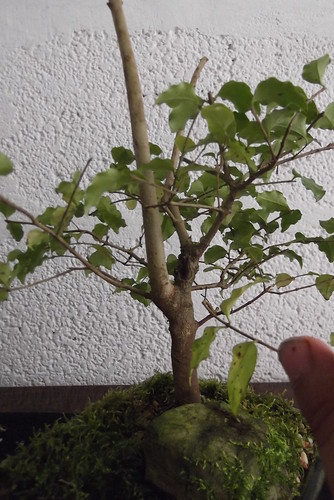
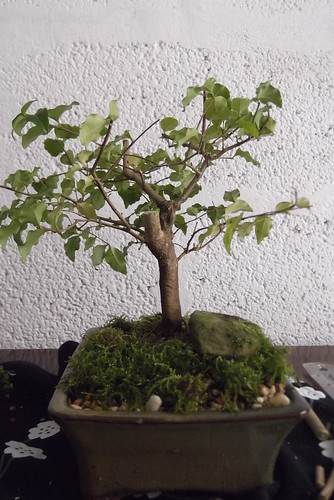
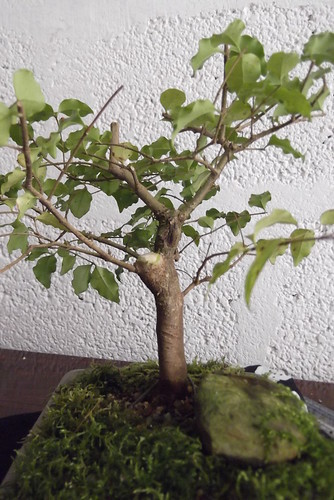
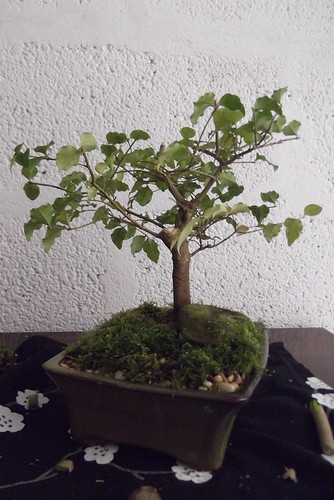
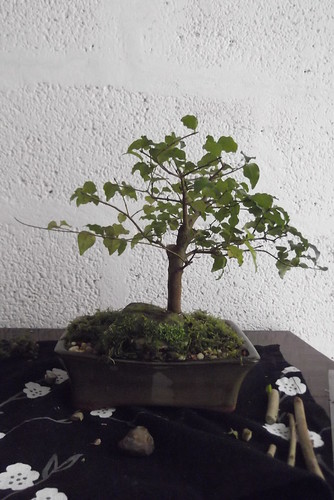
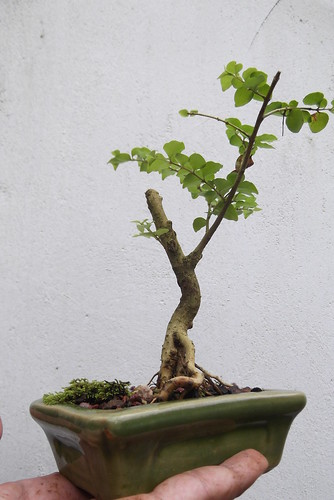
Here is a little progression of a mame privet bonsai that was originally a root. Its still in progress.

Mame is a size classification for bonsai. More here or here.

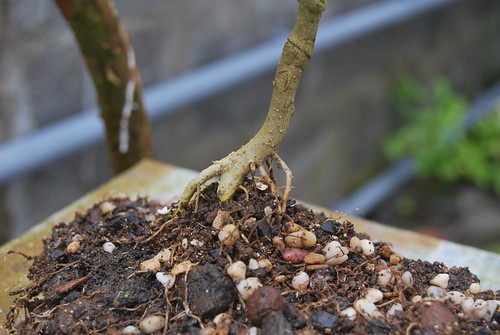
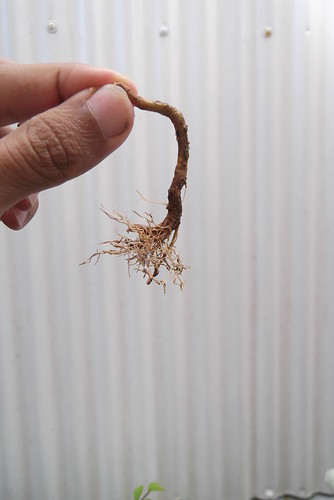
This was originally a root from a Ligustrum Sinense [ Privet ] that I saved during a root pruning session on a ligustrum back in June 2012.
The root has an interesting shape to it.
I place the root in a pot and let some section poking out.
It eventually sprouted new growth and between july 2012 and march 2013, I've got roughly three growth cycles.

I'm not trying to get any thick trunk or anything old looking.
Just testing out ramifications techniques and having some fun.

I'll let the rest of the pictures speak for themselves.

June 2012
Posted Image

Posted Image

July 2012
Posted Image

Sept 2012
Posted Image

Oct 2012
Posted Image

Posted Image

Nov 2012
Posted Image

Feb 2013
Posted Image

Posted Image

March 2013
Posted Image


Next steps:

  • Further refine the ramification. This should generate smaller leaves in return.
  • Re-pot in a smaller pot.

2013-03-04

Ligustrum #002 - Progression - Part 1

Privet [ Ligustrum ] #002 - 2 Year Progression

Species : Privet
Scientific Name : Ligustrum sinense
Collected early 2010 in the garden.
Placed immediately in a pot upon collecting it.
Even though there was lots of growth, the bulking up of the main trunk was painfully slow.
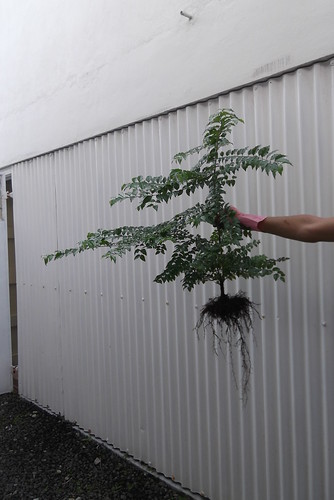
Ended up re-potting it in the ground in June 2011 and allowed to grow freely for one year.
Unearthed in June 2012.

Troène [ Ligustrum ] #002 - Progression sur 2 ans

Espèce : Privet

Nom scientifique : Ligustrum sinense

Recueillies au début de 2010 dans le jardin.
Immédiatement placés dans un pot suite à sa collecte.
Même si il y avait beaucoup de croissance, le tronc ne prenait pas d'épaisseur.
J'ai fini par le planter dans le sol en Juin 2011 et lui a permis de ce développer librement pendant un an.
Déterré en Juin 2012.

Privet [ Ligustrum ] #002 - Progresion lor 2 ans


So nom : Privet


So nom scientifik : Ligustrum sinense

Fin ramas li dan zardin koumansman 2010.
Mo ti met li dan en pot bonsai tout de suite dans sa lepok la.
Problem kin gainney are sa laproche la c ki pied la kontinier pousser ek donne feille, mais so tronc na pa grossi kouma bisin. Li reste en ti kalite, koumadir en ti baton. Li na pas resembley en vrai zabre kan get li.
Ler la lepok juin 2011 mo decid met li dan la terr pour laisse li grossi ek pousser kouma li envi.
Lepok juin 2012 monn fin tir li dan la terr.


June 2010 / Juin 2010
April 2011 / Avril 2011
June 2011 / Juin 2011
[EN] Before it went back into the ground
[FR] Avant d'etre mis en terre
[MU] Avan li all dan la ter
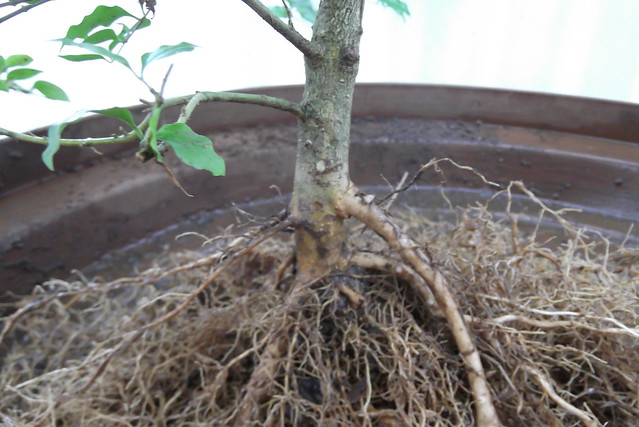
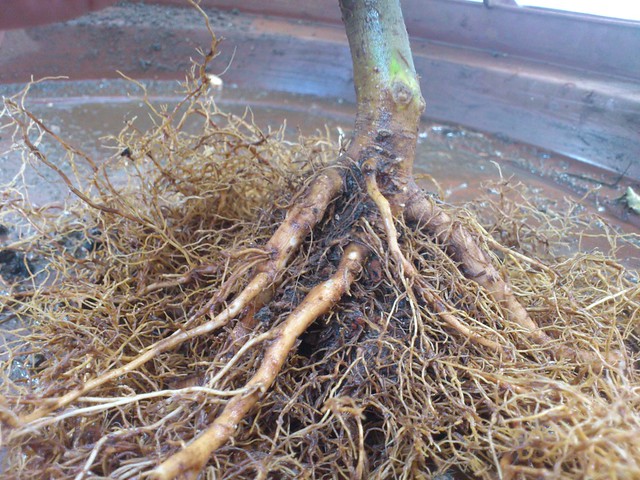
[EN] Root closeup
[FR] Détail des racinnes
[MU] Detail racin
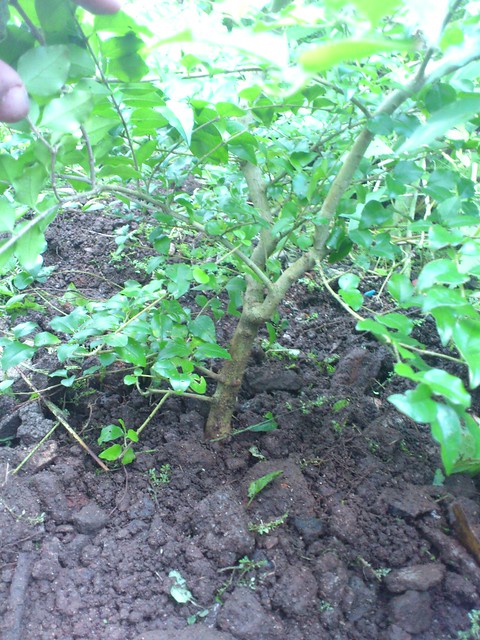
[EN] In the ground
[FR] En terre
[MU] Dan la ter
June 2012 / Juin 2012
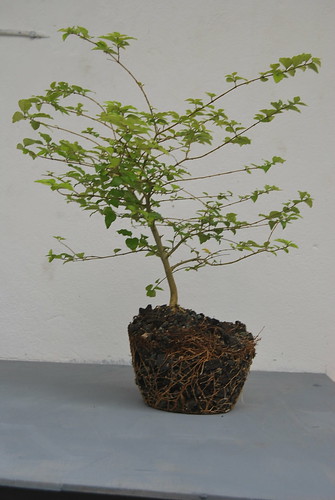
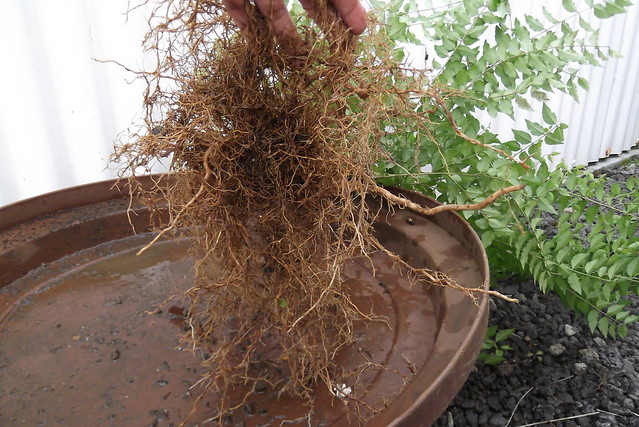
[EN] Unearthed after 1 year
[FR] Déterré après 1 an
[MU] Kan finn tir li depi dan la terr aprey 1 an


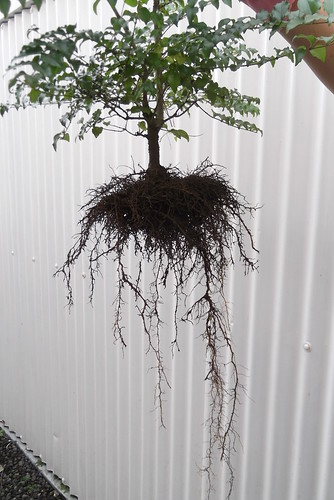
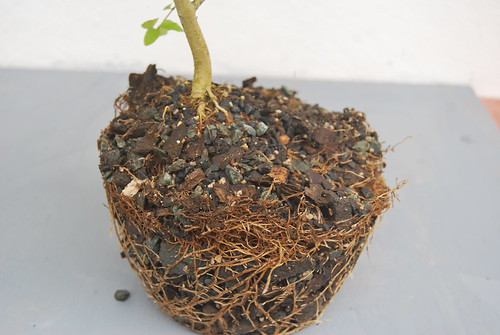
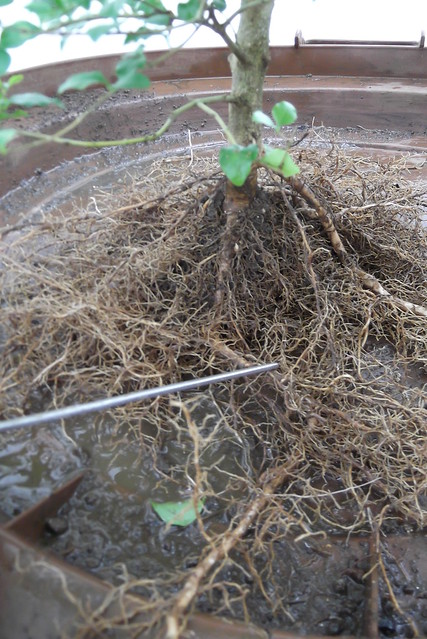
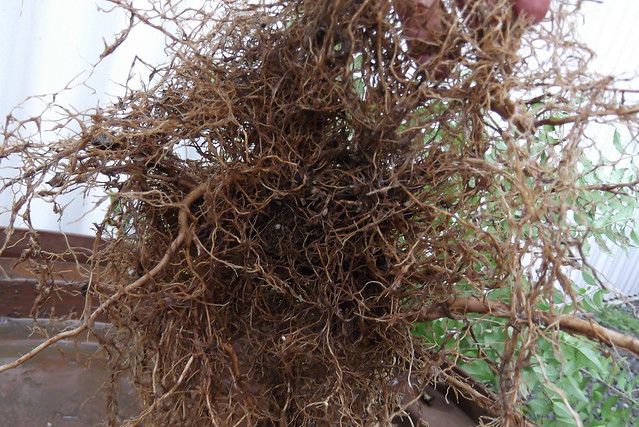
[EN] Close-up of the root ball
[FR] Gros plan de la motte
[MU] So racinn
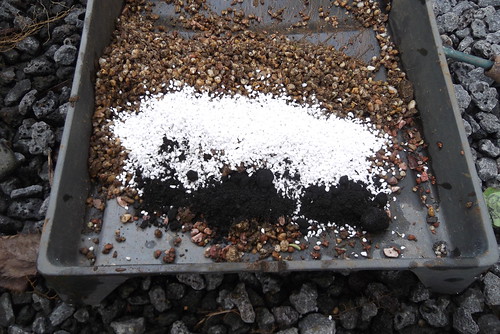
[EN] Making my bonsai soil mix
[FR] Mon mélange de terre bonsai
[MU] La terr bonsai


2013-02-21

Before / After Bonsai Progression Showcase

A quick series of before and after shots of several trees in training, not yet full bonsai, but on its way to be bonsai.
All are still works in progress, some still have 1~3 years ahead and others a good 10 years.

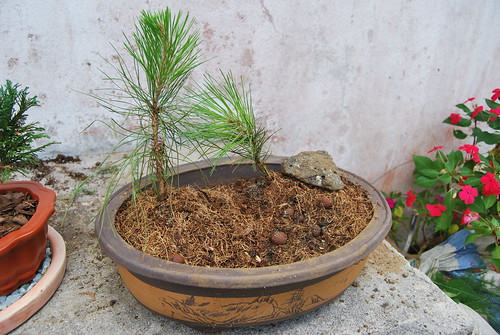
Pinus Elliottii #001
From nursery

Late 2009


Mid 2012


Ligustrum #002
Collected

Mid 2010


Early 2013


Ligustrum #003
Collected

Mid 2010


Early 2013


Rosemary #002
From cutting

Mid 2010


Early 2013


Ligustrum #010
From seed [ 2009 ]

Late 2011


Early 2013


Ligustrum #011
This was initially a piece of salvaged root

Mid 2012


Early 2013


2012-08-15

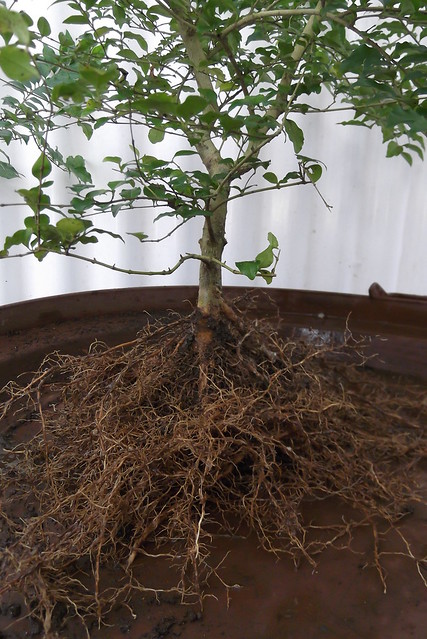
Privet 001 - Working on nebari

Privet [ Ligustrum ] 001 - Working on the nebari


This was one of the first trees it tried to create into a bonsai.
Privet [ Ligustrum ] are really good trees for beginners.
Its a fast grower, it easily roots, it gives off shoots almost anywhere on the tree [ trunk, branches and even exposed roots ] and it readily gives off small leaves.

If you are in the tropics and want to start with a tree to turn into a bonsai, privet [ Ligustrum ] is for you!
An alternative is ficus [ F. Benjamina, F. Retusa, etc ]

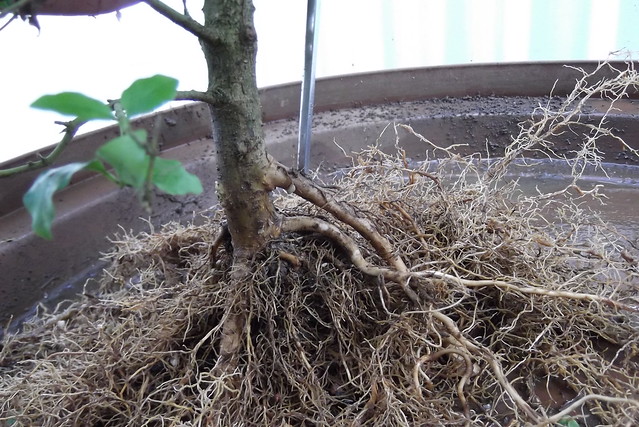
This privet was collected in 2010, then after 1 year of stupidity on my part, i.e. I potting the plant into a bonsai pot from the start, Jerry Norbury suggested that I "place it in the ground, to allow it to thicken up and improve the roots". When you are starting up and you get all those youtube vids that just take the plant out, repot them and "presto" you get a "quick" bonsai, hearing someone suggesting that you put your tree back into the ground is really the last thing you want to hear...

It took me some months, but I ended doing just what Jerry suggested.
I placed the tree back into the ground in 2011 to thicken up and improve the nebari.

Some weeks ago, the tree was starting to grow some new shoots.
It was the right time to check on the roots , so I uprooted it to look at how it was doing and do some corrections it was needed.

Normally you would do this type of operation every 2~3 years in a temperate region, but in the tropics you get two to three growth cycles per year.


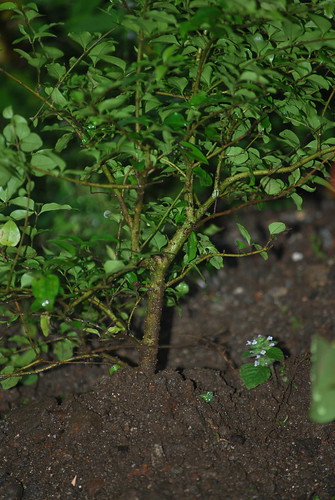
Back in 2011 - Before placing it into the ground.
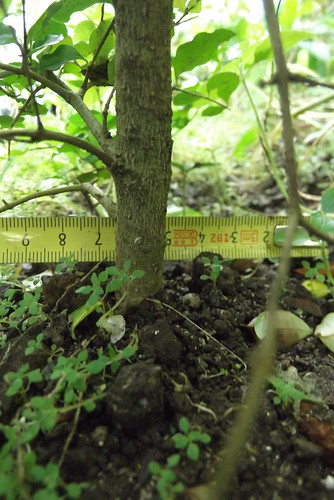
Zoom on the roots - The trunk is very thin after 1 year training
and the nebari [ surface roots ] are non existant.
"In the ground"
After 1 year - the main trunk has thickened up
and the primary branches too.
A 15mm diameter
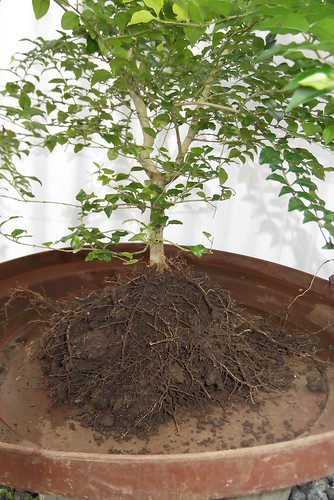
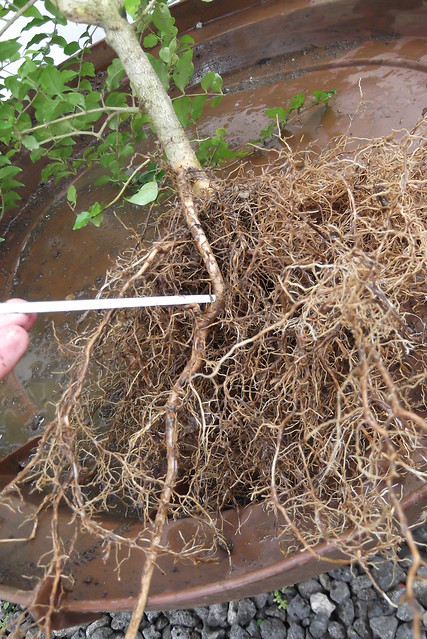
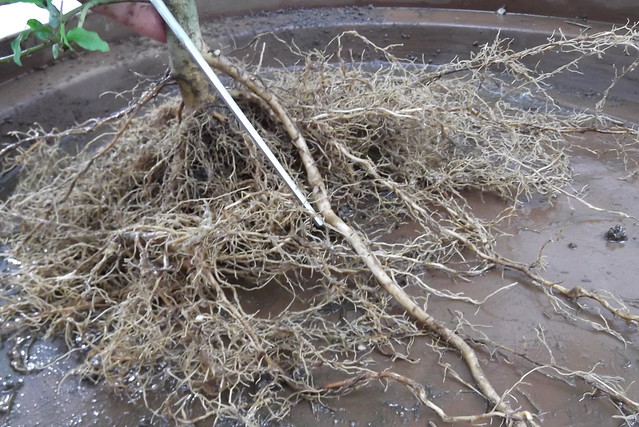
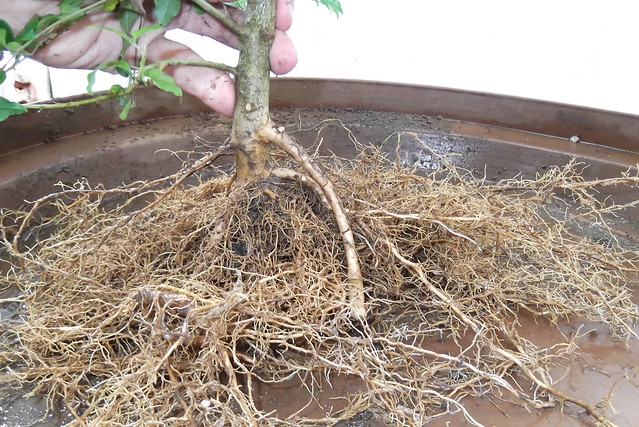
The root mass uncleaned.
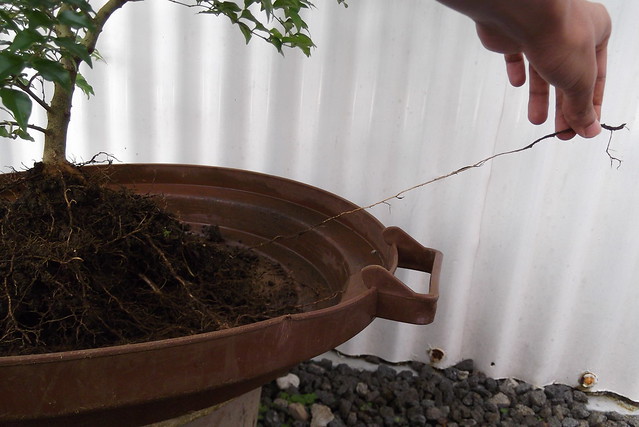
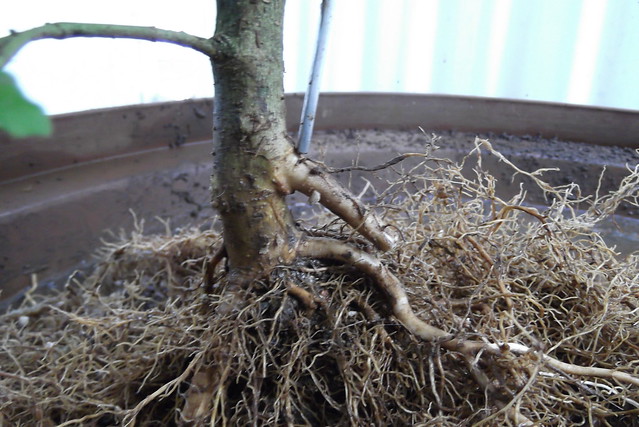
Long lateral root - This is bound to happen in the ground.
The lateral root will spread long and wide from the tree, and
the feeder roots will develop at the end.

We want to avoid this when creating a bonsai.
The lateral roots should be cut back closer to the
 trunk to promote denser feeder roots near the trunk.
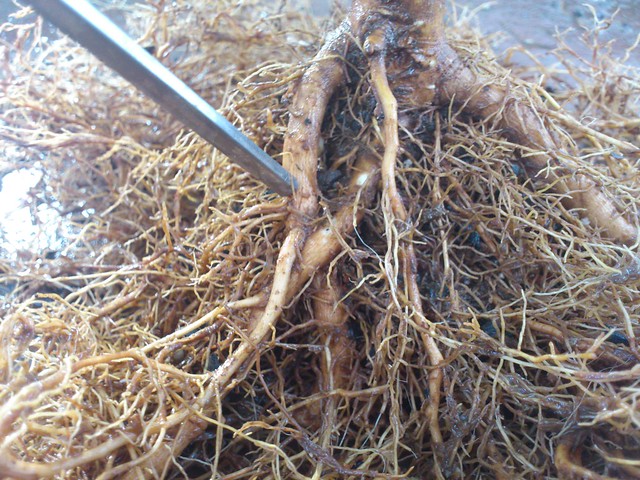
The root ball cleaned
A long and thick lateral root. This will be
reduced in length.
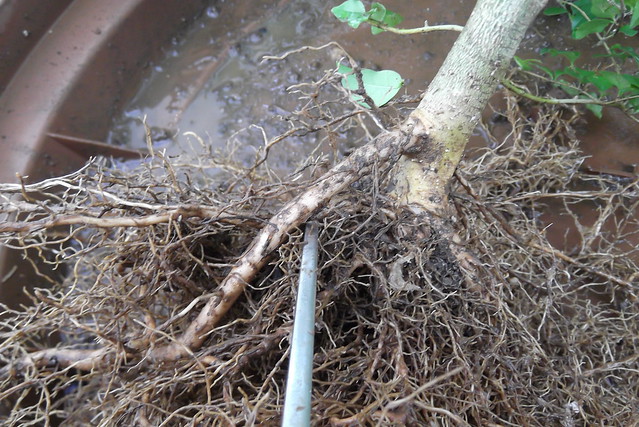
Identifying potential nebari
Another long lateral root that will have
to be reduced in length.
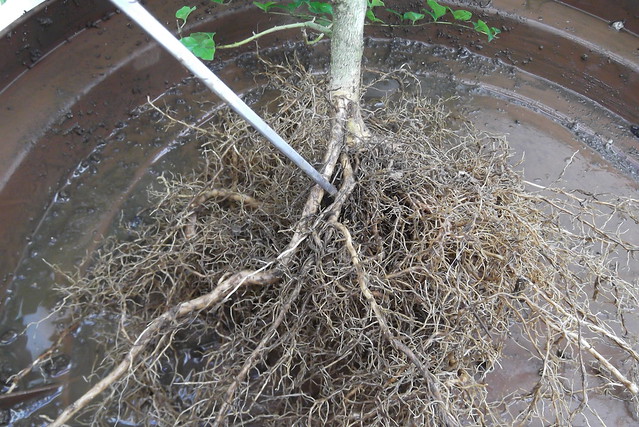
The root system underneath - I'm looking for tap root formations.
Tap roots are necessary for anchoring trees into the ground,
but its not necessary inside a bonsai pot.
Found one tap root [ starts from the middle
of the root and moves out towards the bottom left ] that will be removed.
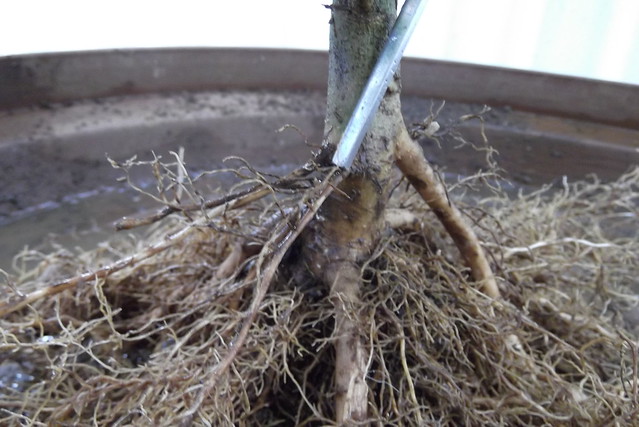
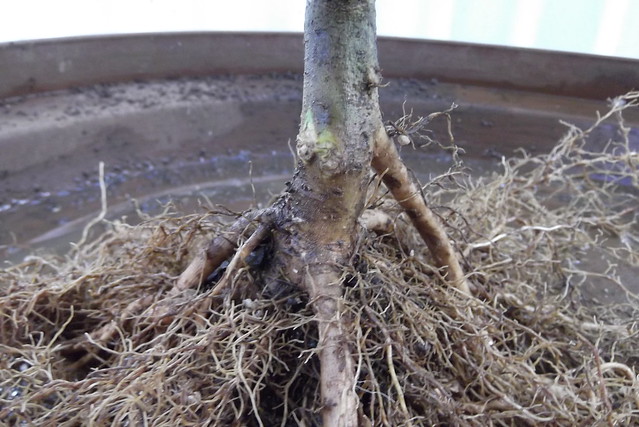
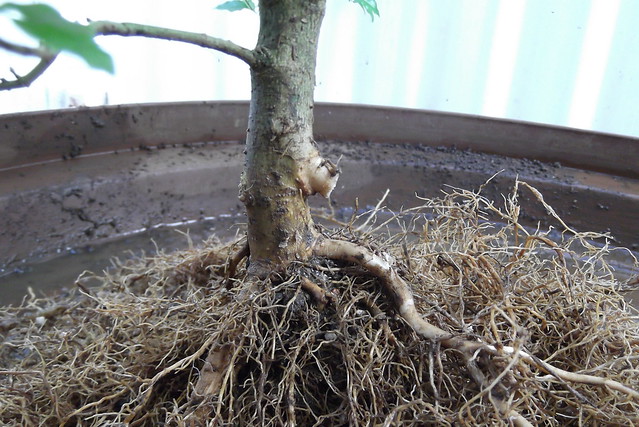
The plant was placed deep into the ground, several roots
occured on the trunk itself.
After removal of the root on the trunk.
Lateral root that needs to be reduced
Same lateral root after it has been reduced
Several roots shooting out of the main trunk
Much better
I was going to keep that root, but most of the nebari
is present much below. I ended up removing it completely.
The root was thick, to avoid any splitting the root was
removed in several stages
Nearly done
Completely removed
Checking the root for any other issues
This root is crossing over one another. When those two
roots thicken this might become an issue.
Seperated roots
Back into the ground.