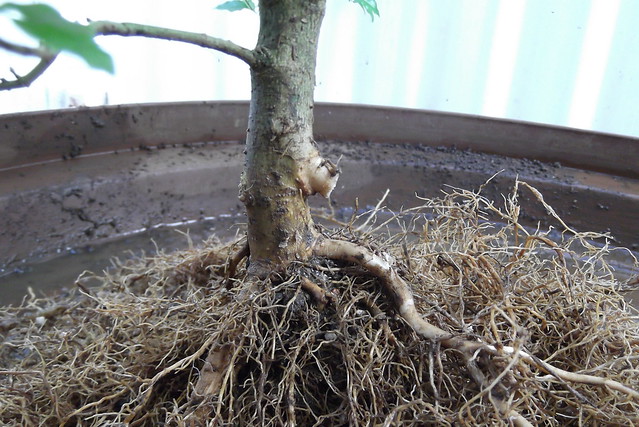
J'ai acheté ce Cryptomeria japonica [Cèdre du Japon] en Juillet 2012. Je n'avais pas de reals projets pour le convertir en bonsaï et pour les mois qui suivirent, il a été laissé dans son sac de pepiniere et laissé dans le jardin. Il y a quelques semaines, j'ai vu plusieurs racines sortir du fond du sac ce qui m'as forcé a faire un rempotage. A la fin je me suis mis a rechercher comment ameliorer le system radicire pour le convertir en bonsaï.

Monn aste sa Cryptomeria japonica [ Cedar ] la en Zuillet 2012. Mo pas tinn prens li pou fer bonsai are li premier cout. En de semainn parla monne trouv racine pe sorti par enbas so pot. Pendan ki mo ti pe repot pied la, so sistem racinn ti pe paret interessant pou fer li vinn en bonsai. Abe lerla monne decide arranze so racinne pou ki pli tard kapav fer li vinne en bonsai.

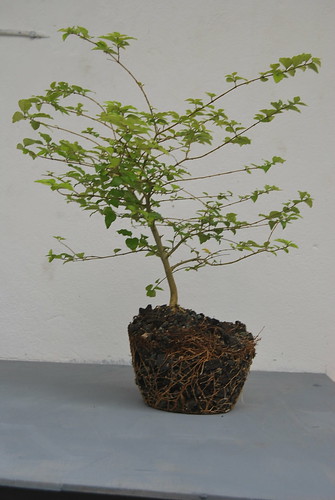
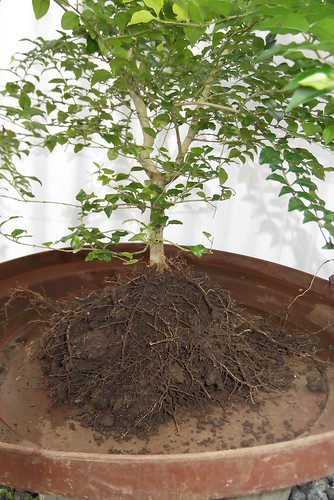
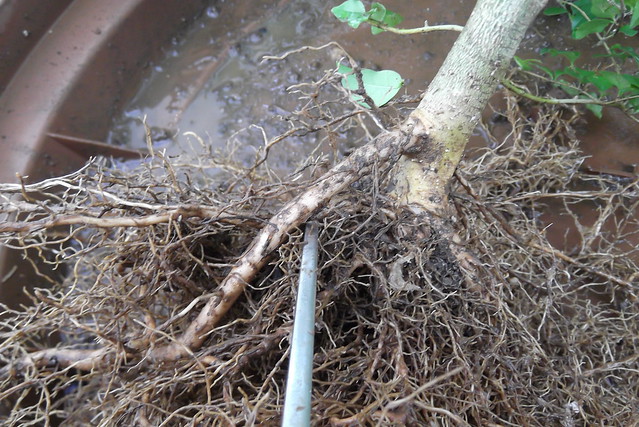
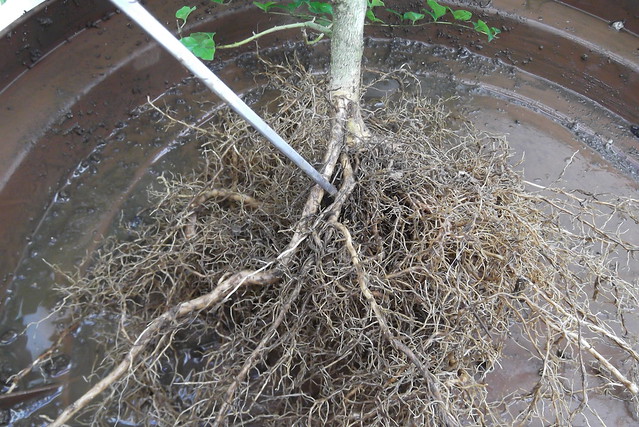
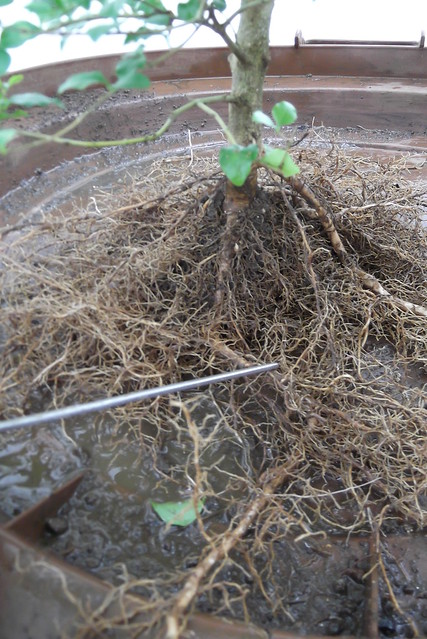
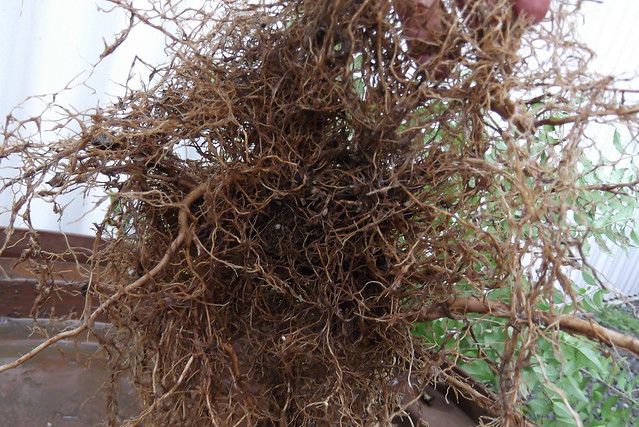
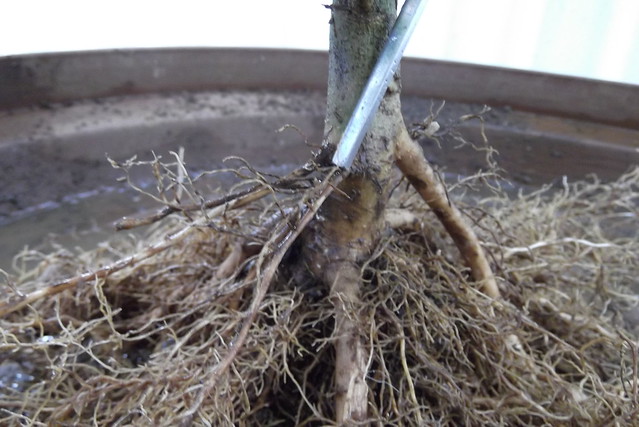
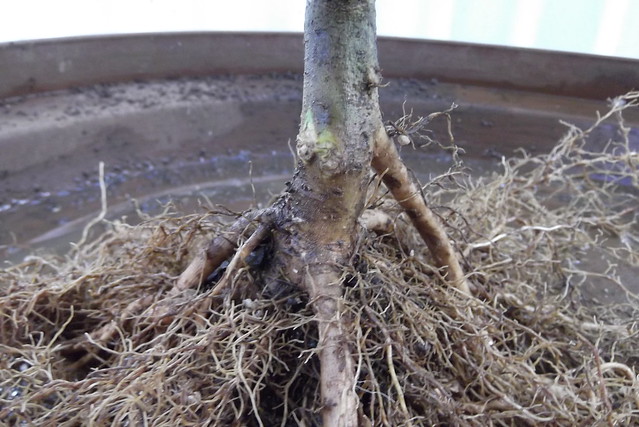
 The root system, after cleaning up the soil Le système racinaire, après avoir nettoyé la terre So sistem racinn kan inn fini netoye so la ter
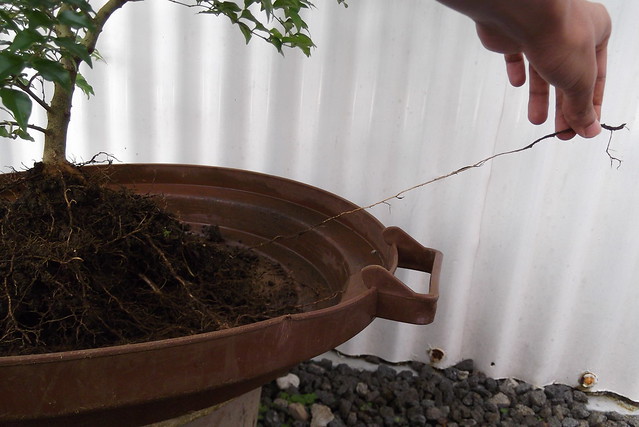
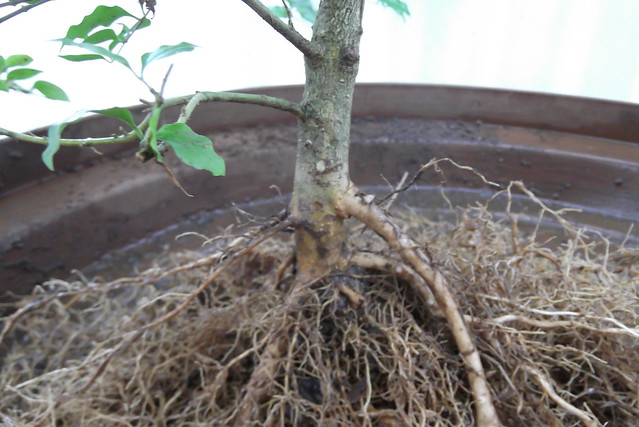
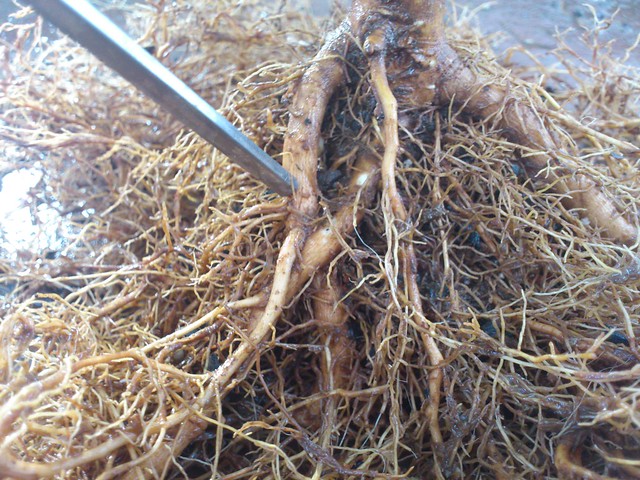
 There were several taproot that needed to be removed Il y avait plusieurs racine pivotante qui devait être retiré Ti ena en tas racinn epais ki servi pou tinis pied la dans la terr, sa banne racinn la in bizin tir zot.
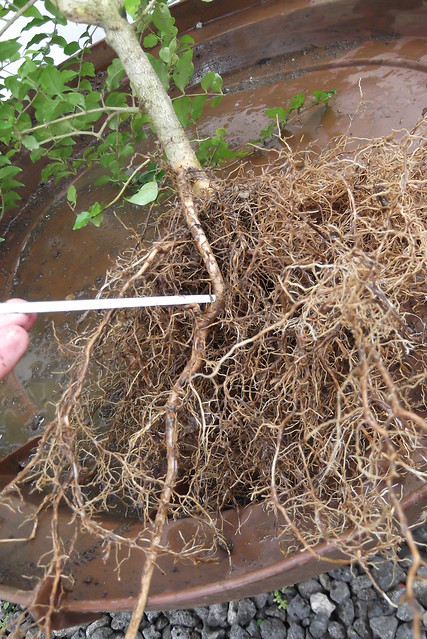
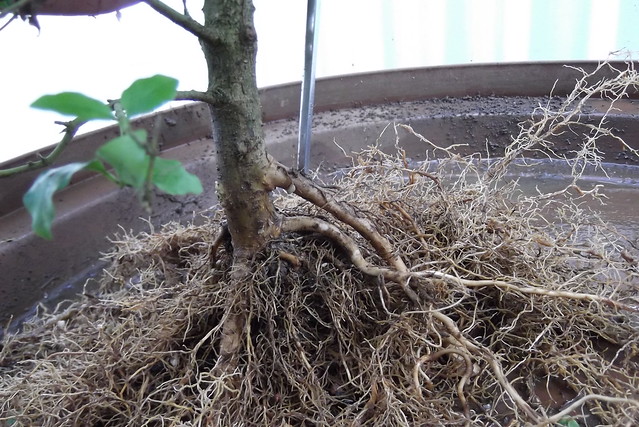
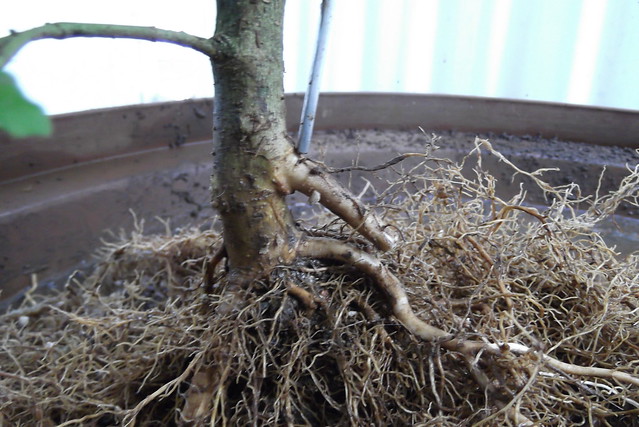
 Lateral root and thicker roots that would eventually develop into lateral roots were identified and removed. Les racines latérales et racines plus épaisses qui finirait par se transformer en racines latérales ont été identifiés et éliminés. Mo finn tir bann pli gro racinn.
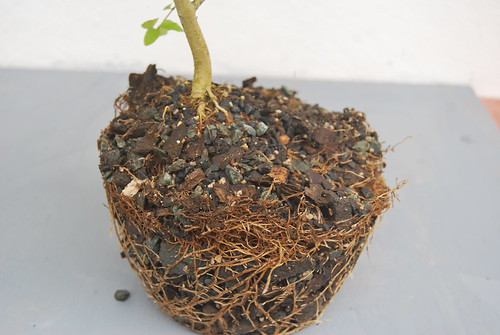
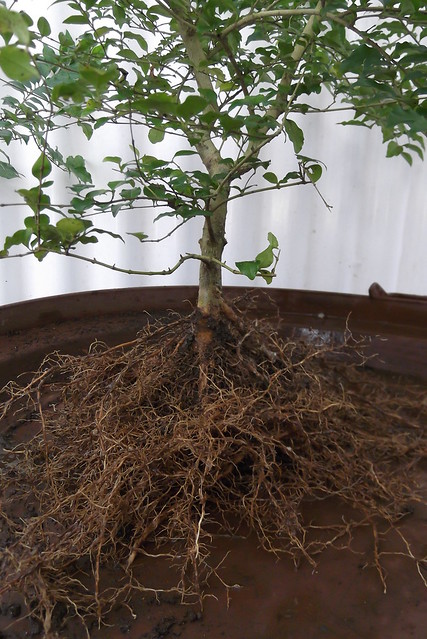
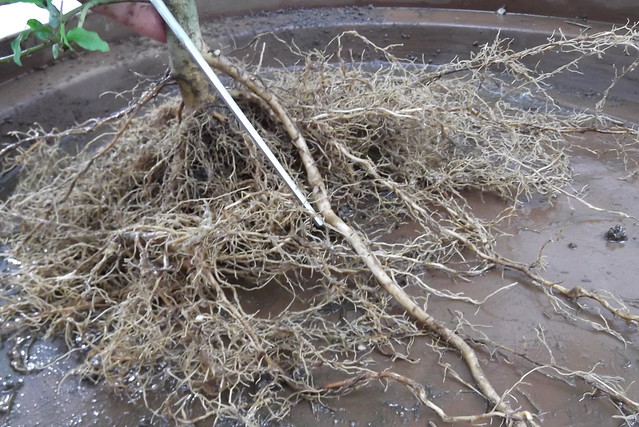
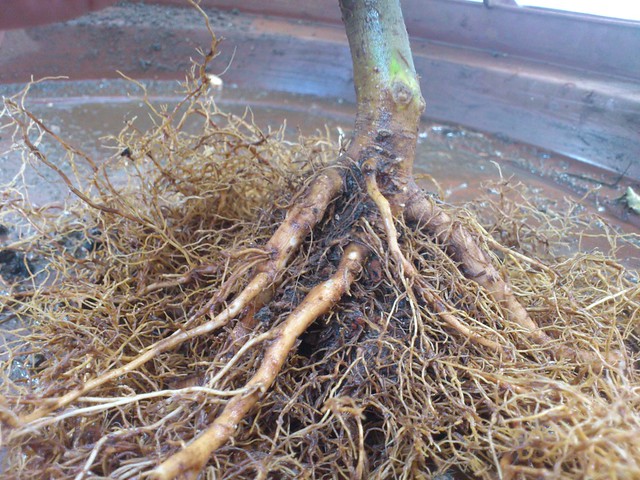
  Finer roots and feeder roots are favored and kept as far as possible close to the trunk. Feeder roots at the end of long lateral roots are reduced to fit into the rootball. Racines fines et les racines nourricières sont favorisé et maintenu autant que possible près du tronc. Les racines nourricières à la fin de longues racines latérales sont réduites pour tenir dans la motte. Monn gard bann racinn fin et tipti racinn ki servi pou nourri pied la, ek monn finn assir mwa ki zot pre ek tron pied la. Bann racinn ki tro long finn rakourci.
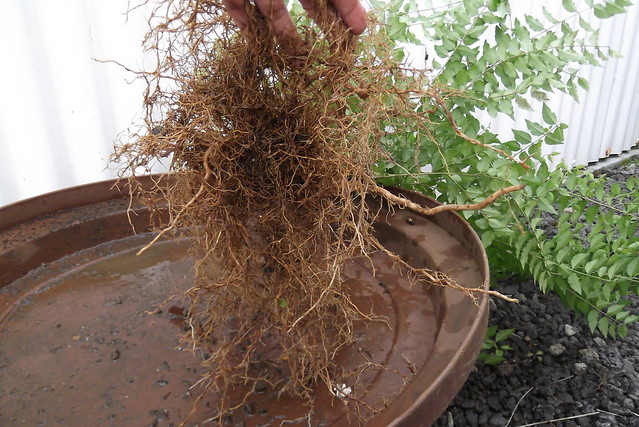
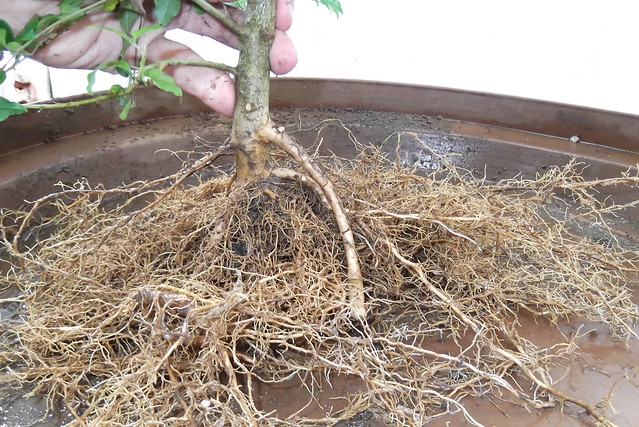
 The rootball after the inital root pruning. The thick lateral roots are gone, the long lateral root have been reduced, and the mass of finer feeder roots have been kept. There are still 4 lateral roots that I kept because there was lots of feeder roots sprouting from them. Those lateral roots will be reduced at the next repotting. Voici la motte après la taille des racines. Les grosses racines latérales ont disparu, les longues racines latérales ont été réduits, et la masse des racines nourricières fines a été conservé. Il y a encore 4 racines latérales que j'ai gardé car il y avait beaucoup de racines nourricières germination d'eux. Ces racines latérales seront réduits au rempotage suivant. Ala leta sistem racinn la apre in fini taille li. Ena enkor enn de gro racinn kin pann koupe akot ena enn ta tipti racinn ki sorti ar zot. Sa bann long racinn la mo ava diminier zot kan pou bizin fer enn lot repot lor li.
 The plant was placed at the center of a training pot, and the roots were disposed in a radial disposition around the trunk. La plante a été placée au centre d'un pot de formation, et les racines ont été disposées dans une disposition radiale autour du tronc. Inn met pied la au milieu en pot ek inn tall so bann racinn autour pied la koumadir en la rou bicyklet.
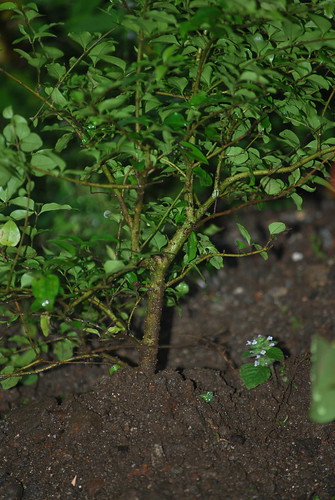
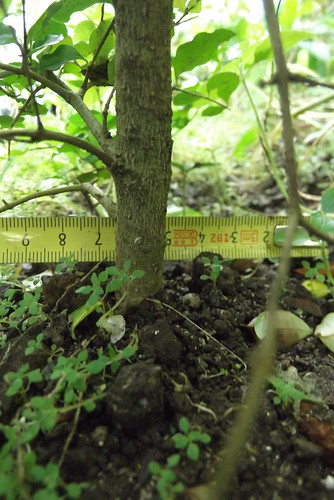
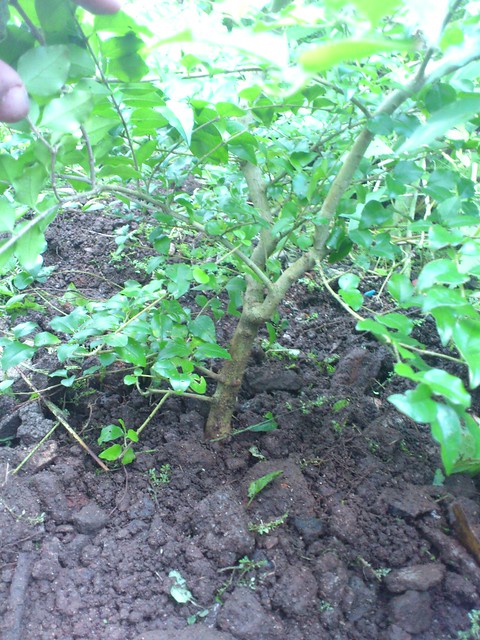
 Finally the roots were covered with earth. This will be allowed to recuperate for 12 months or so and allowed to grow freely to thicken up the trunk and grow new ramifications. Les racines ont été recouvertes de terre. La plante va récupérer pendant 12 mois au moins et seras permis de se développer librement pour épaissir le tronc et développer de nouvelles ramifications. Bann racinn la inn rekouver ek la ter. Mo pou laiss pied la trankil pendan environ enn 12 moi par la, sa ava aide peid la grossi ek fourni nouvo branches.